COVID/WUHAN Research

Centers for Disease Control
Articles from CDC and the Lancet
The National Academies of Sciences Engineering Medicine, February 6, 2020
Letter from the Academy to the White House Office of Science and Technology Policy
WHO Director-General’s remarks at the media briefing on 2019 novel coronavirus on 8 February 2020
As a Guardian headline noted today, “Misinformation on the coronavirus might be the most contagious thing about it.”
However, WHO and partners are fighting back with a four-pronged approach.
First, we’re leveraging our existing network called EPI-WIN – which stands for WHO Information Network for Epidemics. The WHO’s risk communications and ‘infodemic’ management team actively trackmisinformation, in multiple languages,
Third, we are also engaging with search, social and digital companies such as Facebook, Google, Tencent, Baidu, Twitter, TikTok, Weibo, Pinterest and others.
We are asking them to filter out false information and promote accurate information from credible sources like WHO, CDC and others. And we thank them for their efforts so far.
Finally, we are connecting with influencers, through Instagram and YouTube, among others, to help spread factual messages to their followers, with a focus on the Asia-Pacific region.
In essence, to fight the flood of misinformation, we are building a band of truth-tellers that disperse fact and debunk myths.
It is really important to make sure that all activities of the response are adequately funded at WHO and key partners. Just to mention the donors so far and to thank them: the US, the UK, the Bill & Melinda Gates Foundation, the Netherlands, the Czech Republic, Japan and the Wellcome Trust.
Vanity Fair, June 3, 2020
The Lab-Leak Theory: Inside the Fight to Uncover COVID-19’s Origins
On February 19, 2020, The Lancet, among the most respected and influential medical journals in the world, published a statement that roundly rejected the lab-leak hypothesis, effectively casting it as a xenophobic cousin to climate change denialism and anti-vaxxism. Signed by 27 scientists, the statement expressed “solidarity with all scientists and health professionals in China” and asserted: “We stand together to strongly condemn conspiracy theories suggesting that COVID-19 does not have a natural origin.”
The Lancet statement effectively ended the debate over COVID-19’s origins before it began. To Gilles Demaneuf, following along from the sidelines, it was as if it had been “nailed to the church doors,” establishing the natural origin theory as orthodoxy. “Everyone had to follow it. Everyone was intimidated. That set the tone.”
At times, it seemed the only other people entertaining the lab-leak theory were crackpots or political hacks hoping to wield COVID-19 as a cudgel against China. President Donald Trump’s former political adviser Steve Bannon, for instance, joined forces with an exiled Chinese billionaire named Guo Wengui to fuel claims that China had developed the disease as a bioweapon and purposefully unleashed it on the world. As proof, they paraded a Hong Kong scientist around right-wing media outlets until her manifest lack of expertise doomed the charade.
. . . Then came the revelation that the Lancet statement was not only signed but organized by a zoologist named Peter Daszak, who has repackaged U.S. government grants and allocated them to facilities conducting gain-of-function research—among them the WIV itself. David Asher, now a senior fellow at the Hudson Institute, ran the State Department’s day-to-day COVID-19 origins inquiry. He said it soon became clear that “there is a huge gain-of-function bureaucracy” inside the federal government.
. . . Only two other labs in the world, in Texas and North Carolina, were doing similar research. “It’s not a dozen cities,” Dr. Richard Ebright said. “It’s three places.”
. . . The idea of a lab leak first came to NSC officials not from hawkish Trumpists but from Chinese social media users, who began sharing their suspicions as early as January 2020. Then, in February, a research paper coauthored by two Chinese scientists, based at separate Wuhan universities, appeared online as a preprint. It tackled a fundamental question: How did a novel bat coronavirus get to a major metropolis of 11 million people in central China, in the dead of winter when most bats were hibernating, and turn a market where bats weren’t sold into the epicenter of an outbreak?
The paper came to a staggeringly blunt conclusion about COVID-19: “the killer coronavirus probably originated from a laboratory in Wuhan…. Regulations may be taken to relocate these laboratories far away from city center and other densely populated places.” Almost as soon as the paper appeared on the internet, it disappeared, but not before U.S. government officials took note.
. . . they combed open sources as well as classified information, the team’s members soon stumbled on a 2015 research paper by Shi Zhengli and the University of North Carolina epidemiologist Ralph Baric proving that the spike protein of a novel coronavirus could infect human cells. Using mice as subjects, they inserted the protein from a Chinese rufous horseshoe bat into the molecular structure of the SARS virus from 2002, creating a new, infectious pathogen.
This gain-of-function experiment was so fraught that the authors flagged the danger themselves, writing, “scientific review panels may deem similar studies…too risky to pursue.” In fact, the study was intended to raise an alarm and warn the world of “a potential risk of SARS-CoV re-emergence from viruses currently circulating in bat populations.” The paper’s acknowledgments cited funding from the U.S. National Institutes of Health and from a nonprofit called EcoHealth Alliance, which had parceled out grant money from the U.S. Agency for International Development. EcoHealth Alliance is run by Peter Daszak, the zoologist who helped organize the Lancet statement.
British-born Peter Daszak, 55, is the president of EcoHealth Alliance, a New York City–based nonprofit with the laudable goal of preventing the outbreak of emerging diseases by safeguarding ecosystems. In May 2014, five months before the moratorium on gain-of-function research was announced, EcoHealth secured a NIAID grant of roughly $3.7 million, which it allocated in part to various entities engaged in collecting bat samples, building models, and performing gain-of-function experiments to see which animal viruses were able to jump to humans. The grant was not halted under the moratorium or the P3CO framework.
. . . Daszak mobilized so quickly for a reason, said Jamie Metzl: “If zoonosis was the origin, it was a validation…of his life work…. But if the pandemic started as part of a lab leak, it had the potential to do to virology what Three Mile Island and Chernobyl did to nuclear science.” It could mire the field indefinitely in moratoriums and funding restrictions.
The Lancet – There are many addendum’s to this article. This is only one.
Addendum: competing interests and the origins of SARS-CoV-2, June 26, 2020
REVIVAL OF PAGANISM
Mother Gaia
ECOSYSTEM – REGIONAL MANAGEMENT
UNDER THE UNITED NATIONS
IDAHO – COVID
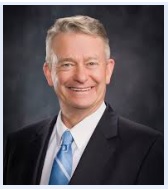
Idaho Governor Brad Little
*** Coming Soon ***
NY Post, June 3, 2021
House Republicans demand briefing on White House ‘gain-of-function’ policies
June 4, 2021
NY Post
Who is Peter Daszak, the nonprofit exec who sent taxpayer money to Wuhan lab?
Ecohealth Alliance
The nonprofit, which says it’s “dedicated to protecting wildlife and public health from the emergency of disease,” has received as much as $15 million a year in grant money from various federal agencies, Vanity Fair said.
EcoHealth has used those grants to fund controversial “gain-of-function” research — which can increase the infectiousness and virulence of viruses — at facilities that include the Wuhan Institute of Virology, according to Vanity Fair.
Daszak is a zoologist
PubMed
August 23, 2004 – The role of wildlife in emerging and re-emerging zoonoses
Rand Paul revives the issue of the COVID propaganda and government actions with a whistleblower hearing on May 13, 2026.
COVID-19 Whistleblower Testifies Publicly Before Rand Paul-Led Senate Committee
